

How To Draw A Saber Tooth Tiger Head Step By Step
I've been studying feline heads for a few years at present with a goal to understand them completely, to be able to create new species without any references. If this alone wasn't difficult enough, I also wanted to develop a "recipe" that could potentially be used for other mammals, or the carnivores at least. I remember I succeeded at this at least partially, so hither'southward a tutorial with a detailed caption of the technique that I use for drawing all cats, big and small. My study isn't finished yet, but I think I know enough to share some tricks with you!
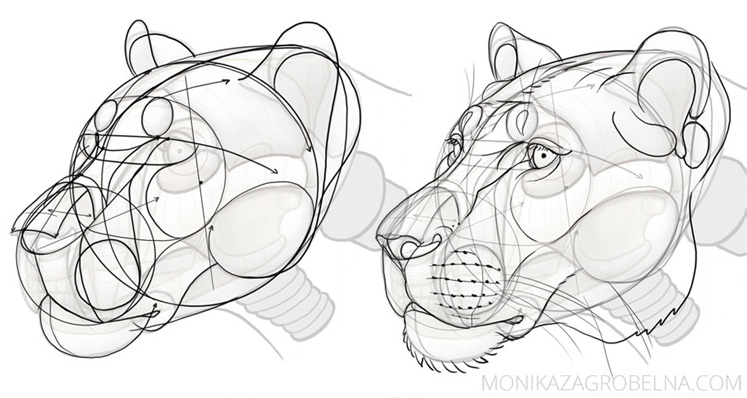
Feline Head Beefcake
It all starts with anatomy. What we tin can run into on the surface is just the finish effect of what'south beneath, and while you don't take to be able to draw a skull from retention, knowing its structure tin can help you create new species with realistic anatomy, or reconstruct the await of an extinct cat merely from its skull.
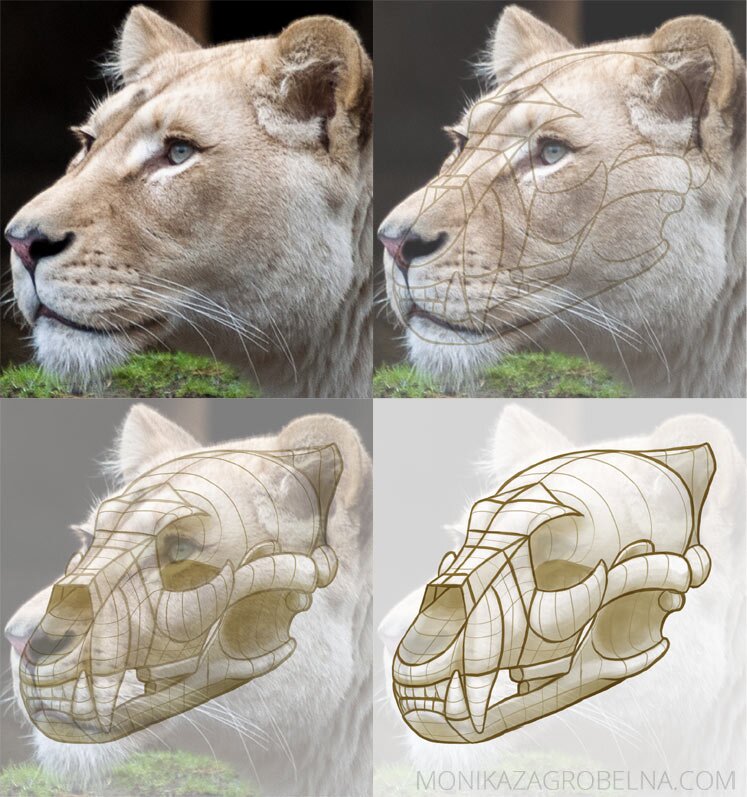
This is what a feline skull looks like nether the layers of fur, pare, and muscles. Information technology'southward simplified to nowadays simply the crucial forms. Notice that the corner of the lip is hanging below the edge of the lower jaw. The round expanse with whiskers covers the upper fang almost fully, but non completely—some of it can exist buried in the lower lip, in a special pouch that I'll bear witness you later on.
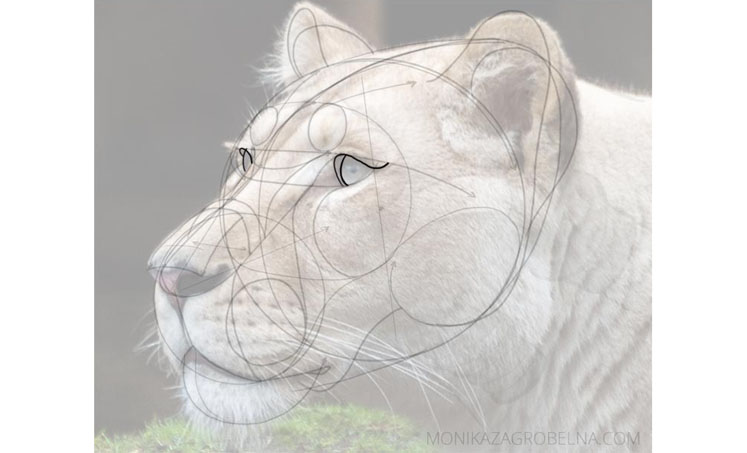
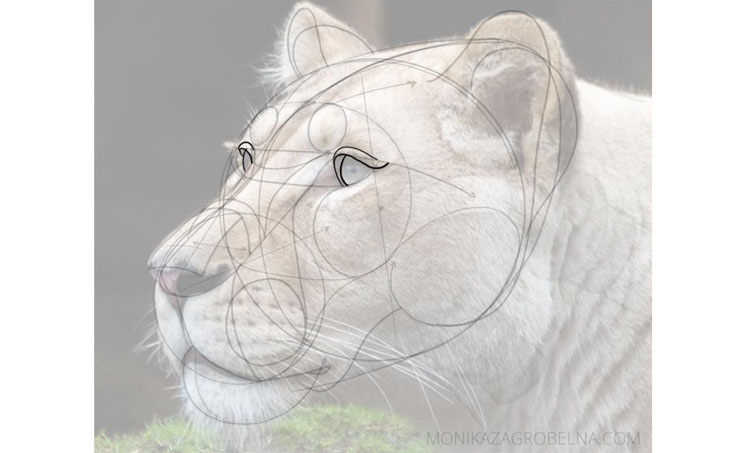
To make sure you understand how the skull reveals itself in the head of a live lion, print this template and sketch the skull on each caput.
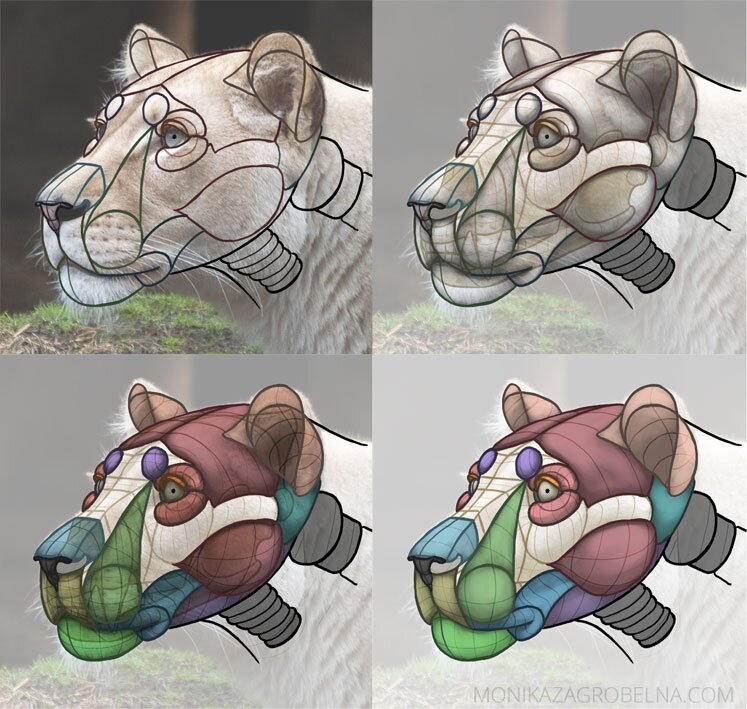
The skull is the foundation for the muscles. There are a lot of them on the caput, but we don't accept to know each one's proper name and location. I grouped the muscles into sections based on their part and how they affect the final await. To sympathise them better, describe them on your template (with or without the skull). Detect that the throat starts in the back, under the lower jaw, making the neck wider at this bespeak (I simplified it, simply information technology'due south useful to think of it this way).
How to Draw a Lion Caput Step by Step
Permit's encounter what the actual method is about. The proportions will differ among species, but these elements are like blocks that you can utilise to build any cat's caput. Experience free to alter this method—information technology's non set it stone, it'due south just 1 of many possible interpretations of the simplified anatomy I've presented earlier. The society is too not very strict—yous can try my exact method in one case, and they utilize what you've learned to create your own way.
It can be also very helpful to follow my method by drawing directly on the template. This way you'll come across how to utilize all these steps to every view imaginable.
Pace 1
If y'all want to draw anything from imagination, you need to be able to draw in perspective, menses. There's no other way. I've explained my method of freehand drawing perspective here:
- Part 1: how to describe a cube
- Part 2: how to draw a box
- Part 3: how to draw an ellipsoid
You should also find this tutorial helpful, if you have more questions. You tin can likewise analyze this diagram (click for total view):

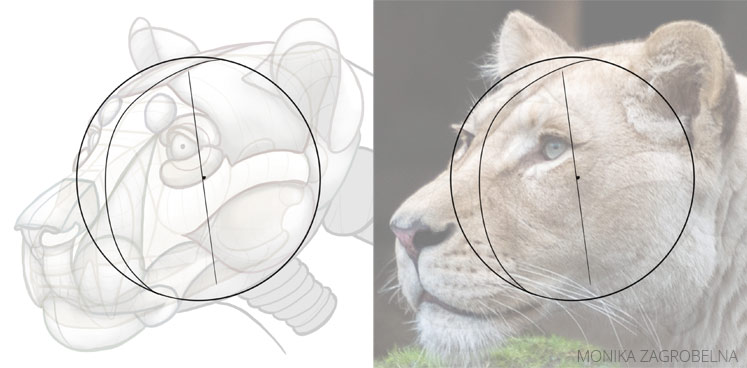
And so, to describe a true cat head, first draw a sphere. Not a circle! Think: even if your cat is looking direct ahead, the sphere should exist slightly tilted downwards, because the cage lies below the middle line of this sphere. This sphere contains the back of the skull, along with the muscles on the top of the head and the large cheek muscles.
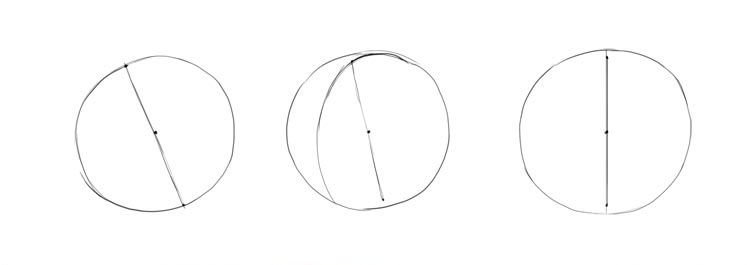
Step 2
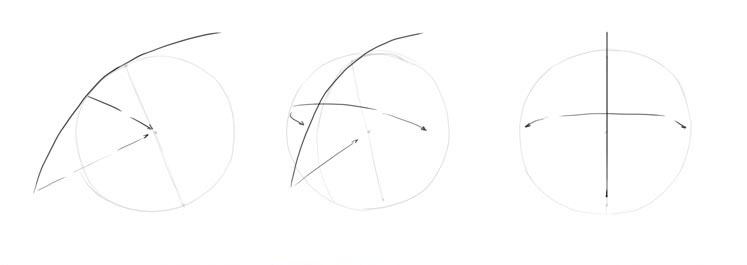
Draw a cross over it:
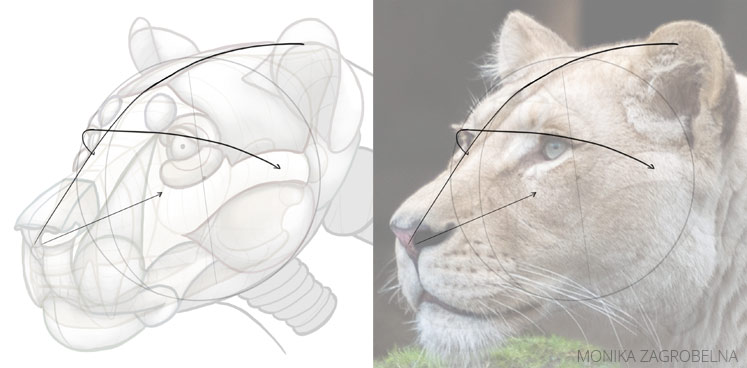
- The eye-line should exist a curve connecting both sides of the sphere. You don't have to draw it all, only this volition assistance yous imagine its shape.
- The middle line should slightly curve downwards. Some species have a deeper curve, so that's one of the ways to recognize them. This middle line should point towards the center of the sphere. Find that it's not the contour of the head, only rather of the skull (nose excluded).
You can depict the eye line wherever you lot wish, and and so you take to arrange its curve and the profile-line of the caput to the perspective.
Pace 3
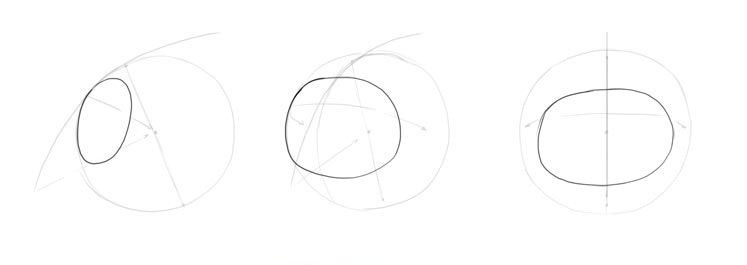
Draw the eye sockets area. You can imagine information technology as ski goggles. Find that it doesn't lie flat in the front—its as tilted as the half of the sphere, so its lower office protrudes forrard. This will help us marking the bones around the eye for both eyes at the same time.
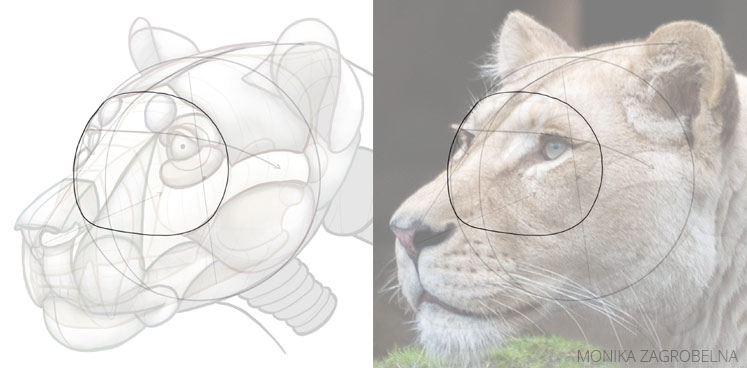
Footstep 4
Draw the cheeks at present, correct behind the "goggles".
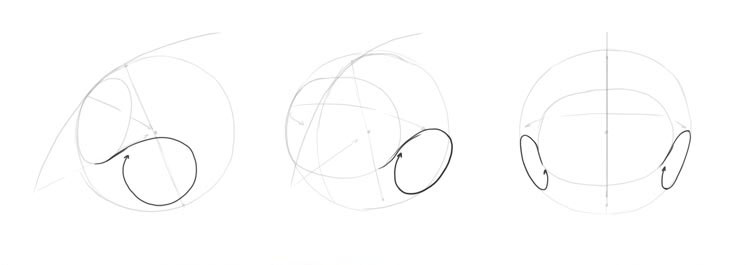
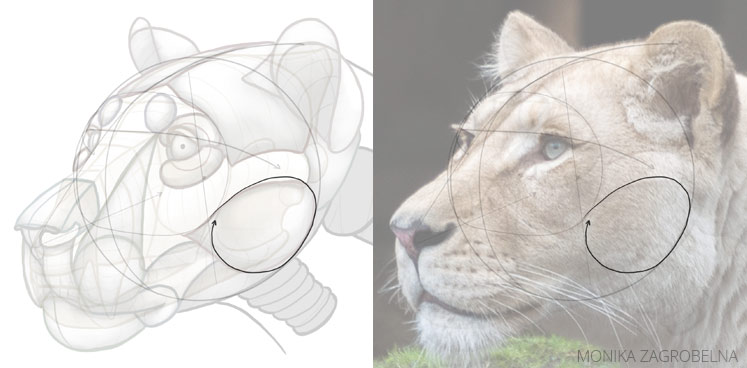
Stride 5
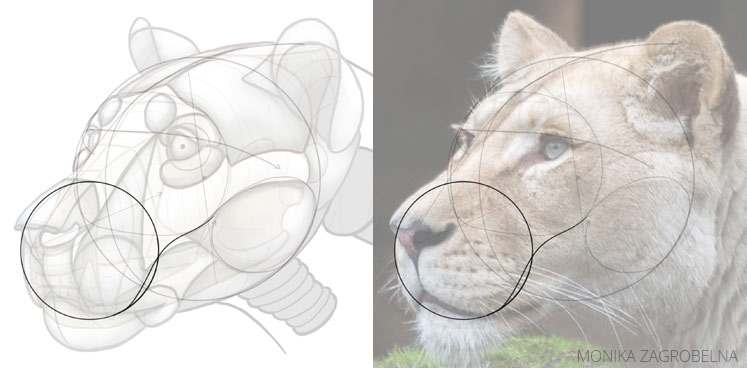
It's the trickiest office. I tried many ways to add the muzzle, and I still haven't found anything fool-proof, something that would work regardless of your level of skill. At this point, I can describe it like that:
- The muzzle-sphere is smaller than the "goggles"
- It overlaps with the big sphere in the back (how deep, depends on the species)
- First imagine it inline with the heart line of the sphere, and so push information technology downward
You tin also draw a line from the side of the "goggles", going towards the middle curve.
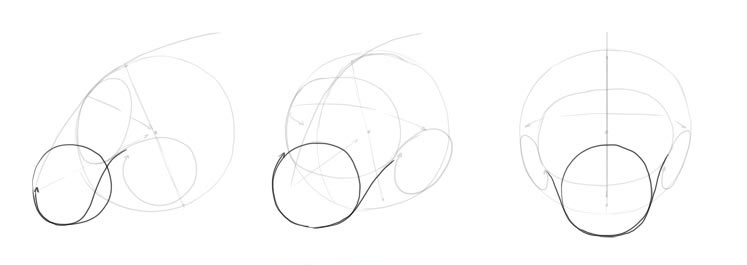
Pace 6
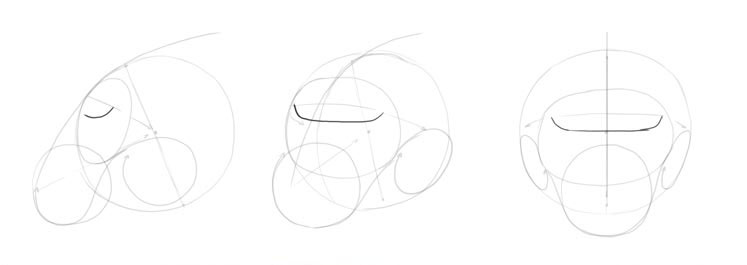
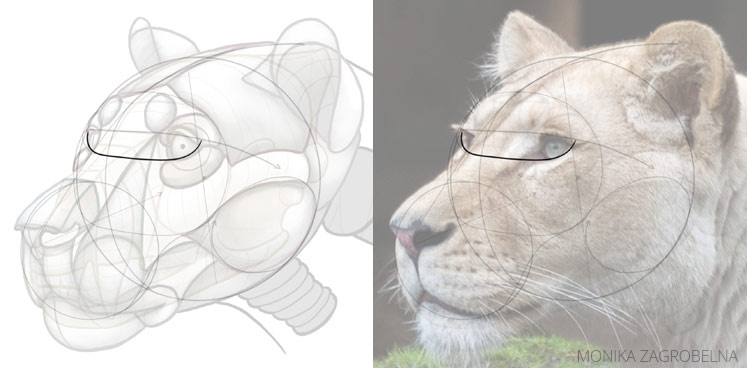
This was the crucial part, now everything should be easier! Draw the lower edge of the optics. It's a forrard-protruding curve. The bigger the cat, the narrower the eye-slit should be.
Stride 7
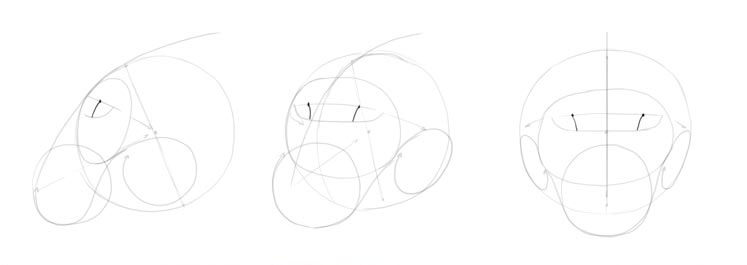
Draw the side line of the eyes. The bigger the cat, the larger the space betwixt the eyes. The space for the eyes should resemble roughly an almond shape—this heed trick volition help you choice the correct size.
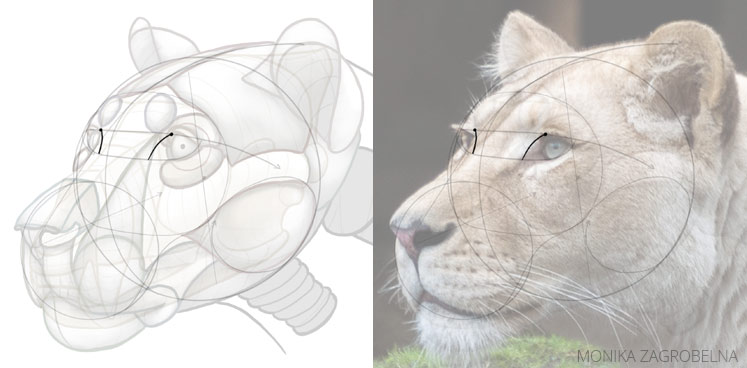
Stride 8
Draw a line from the corner of each eye towards the heart curve. It's the side of the nasal span. Go along in listen the superlative of the olfactory organ volition exist slightly higher! This is but the skull.
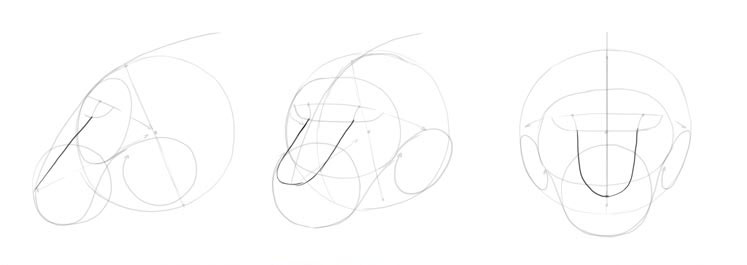
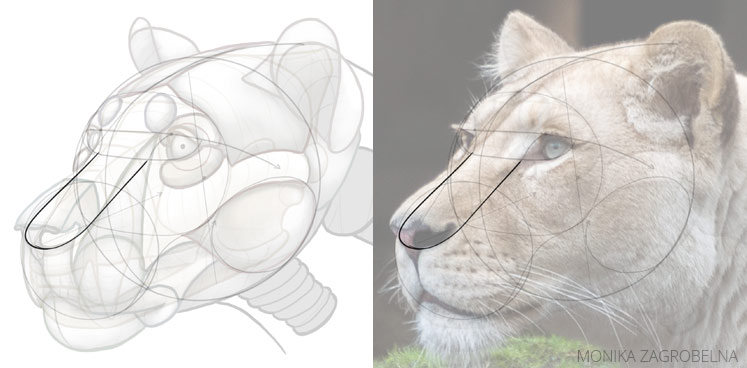
Step 9
Draw the front of the oral cavity now.
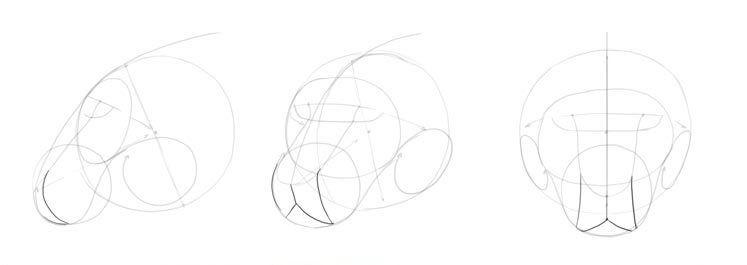
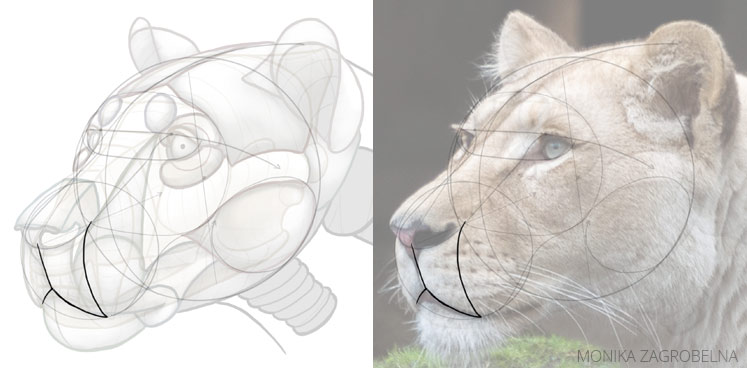
Pace 10
The whiskers area is circular and it points towards the corner of the optics. This round expanse is smaller in bigger species, so there'due south a distance between it and the "goggles". At this point you should observe the feature shape of a teardrop, or a sack. It's a skillful timer to correct the size of the muzzle, if necessary—it should fit between the eyes.
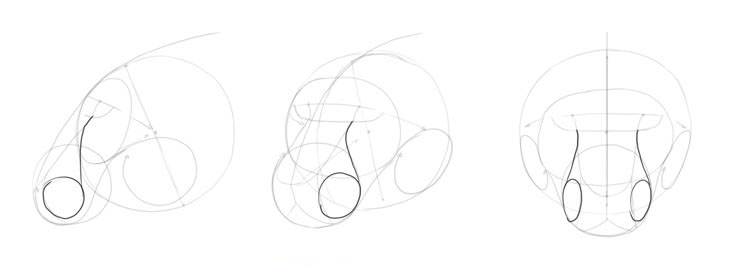
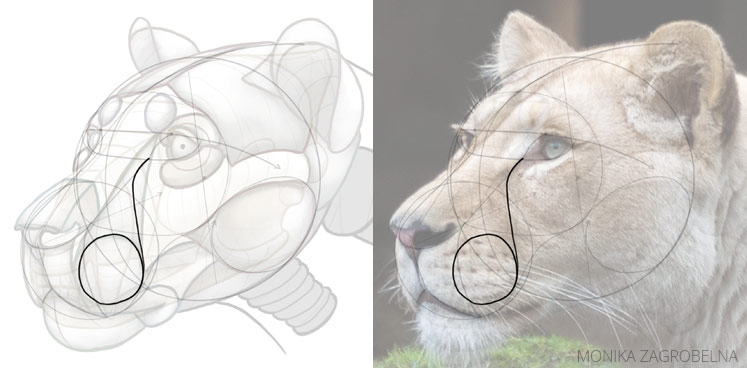
Step 11
Now you can depict the front end of the heart socket, to better see its bone structure. It's optional, but it can assistance if yous draw a specific species—the distance between this surface area and the previous ane is important!
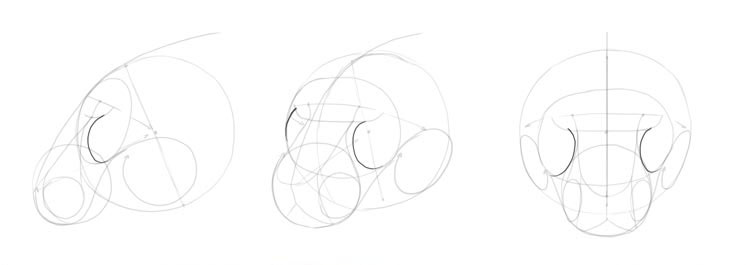
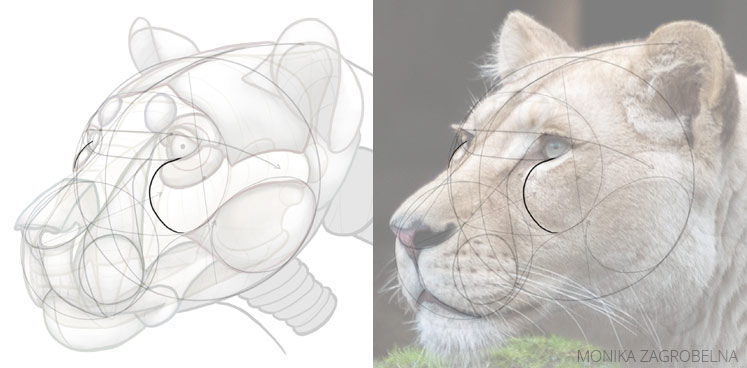
Footstep 12
Depict the mentum. In lions and tigers it's quite large and protruding, simply nigh cats have it smaller and not as prominent.
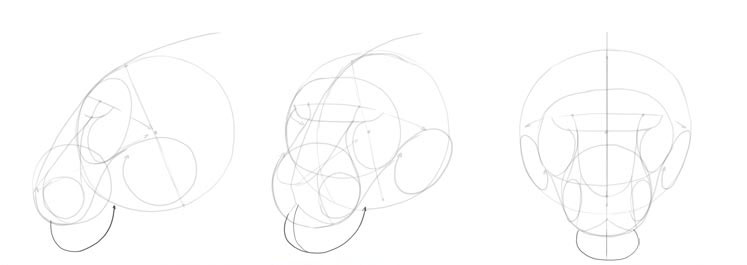
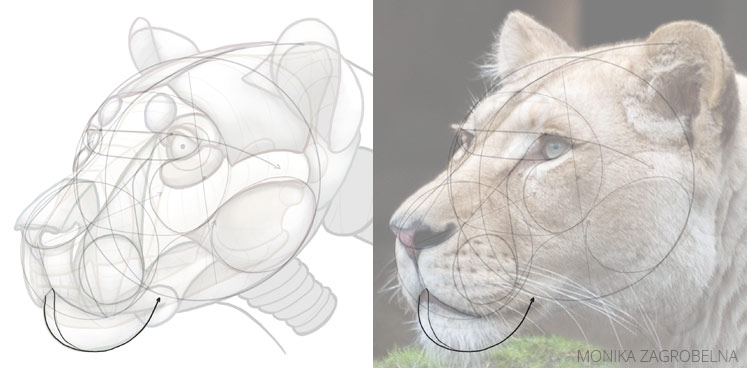
Step xiii
Draw the lips. In bigger cats they may sag below the jaws, considering the jaws open up so wide that some extra loose skin is necessary.
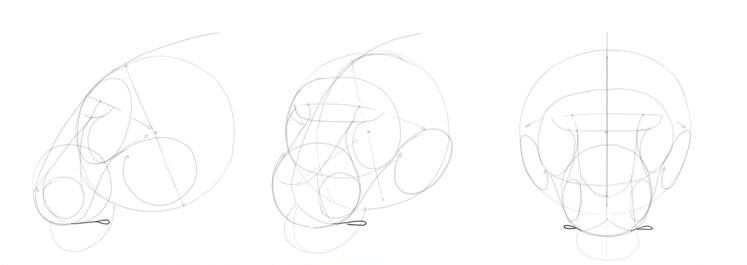
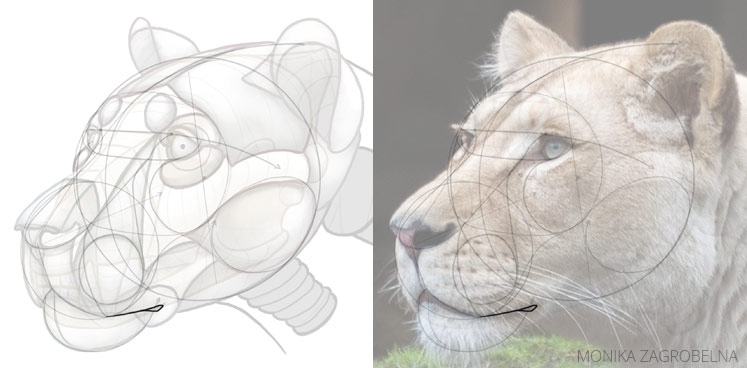
Footstep xiv
This loose skin is attached in front of the cheek.
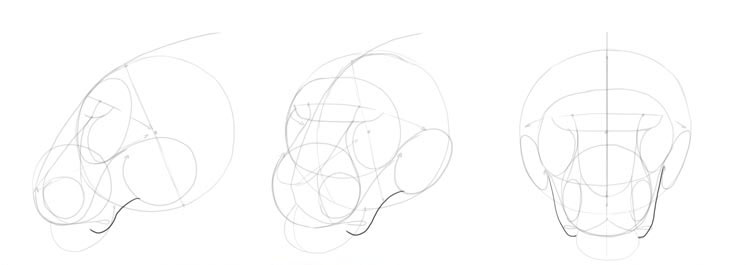
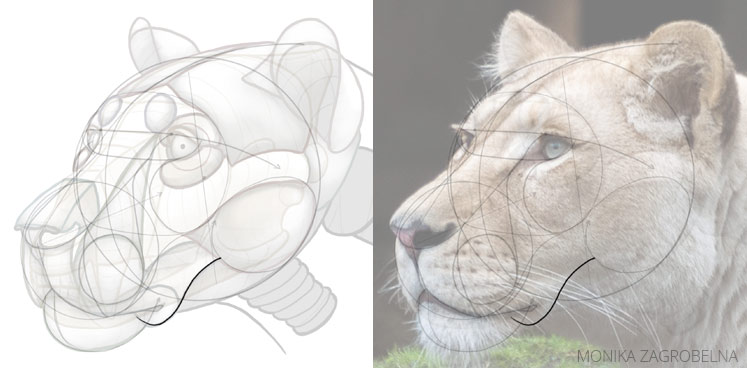
Step 15
Outline the whole head. The get-go sphere was just a helpful estimation of the shape of the head, merely as you may notice past looking at the skull, the head is really slightly elongated (especially in lions)
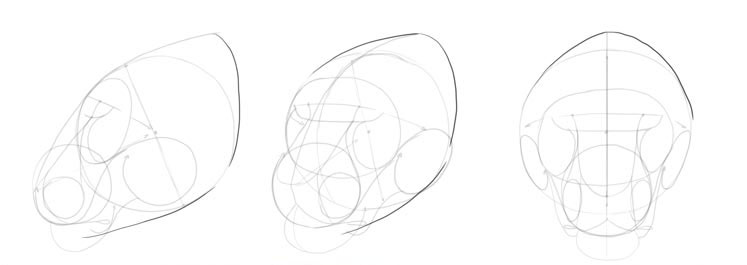
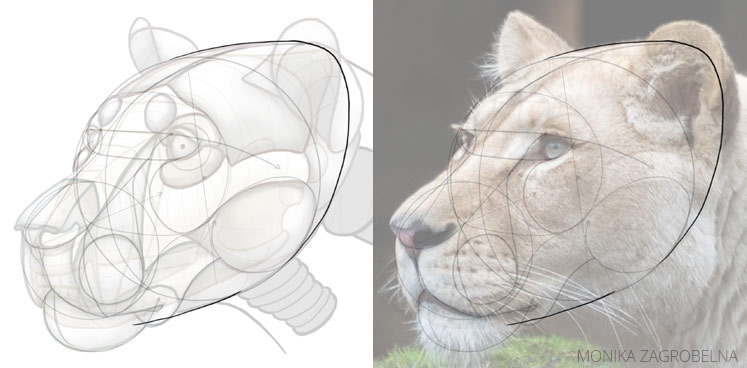
What about an open oral cavity, though? Most methods care for the whole head as one entity, but in my method it's not the case, so you lot can safely draw the lower jaw separately. Just go on perspective in cheque!
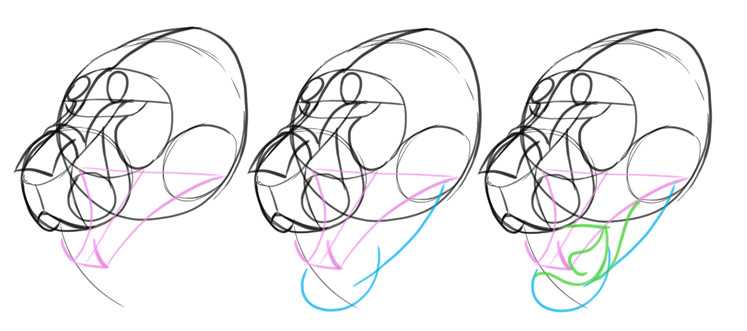
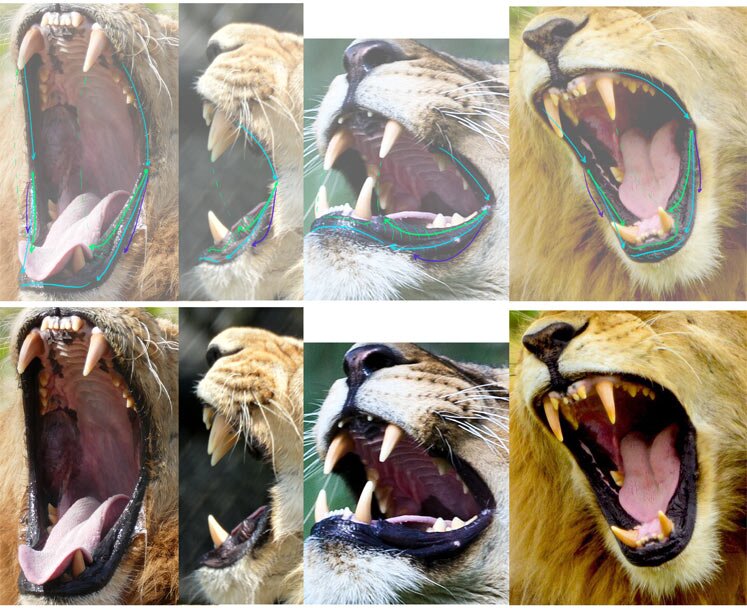
Of course, open mouth means more details to draw. I don't want to spend likewise much time explaining all of them, every bit yous can easily learn this from photos, merely in that location'south i thing you demand to be aware of. The lower lip has two parts—the outer i and the inner i. The outer one looks but like a normal lip, and the inner ane is flatter. It creates a "pouch" for the upper fangs (dogs accept a similar structure, so yous can report them, too). The loose peel of the mouth gets stretched when the oral fissure is wide open up…
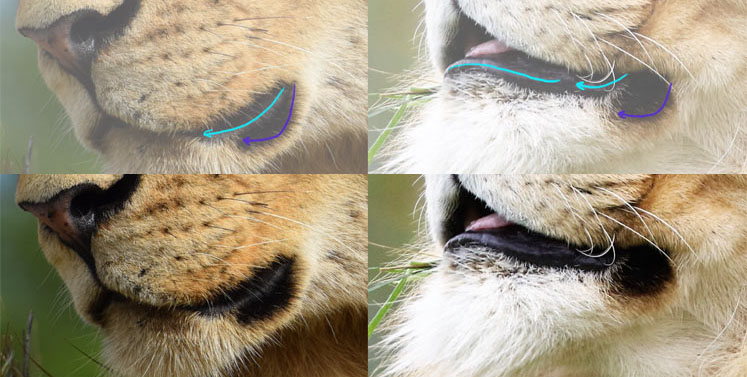
… but it stays visible when the mouth is closed. Additionally, in that location'due south frequently dark marking effectually the lips, which may give an illusion of even stronger sagging, or slightly open up mouth. But information technology'due south just some color! Compare this lower prototype to the upper 1 to run across what happens to this pigmented part when the mouth opens.
Step 16
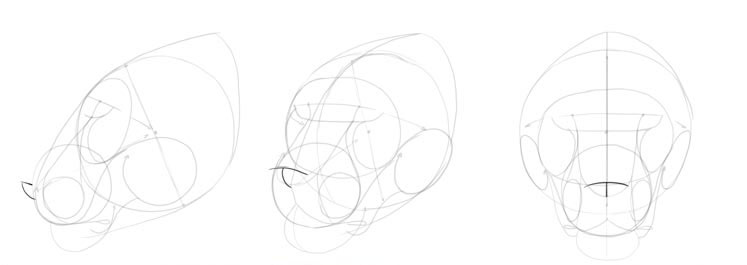
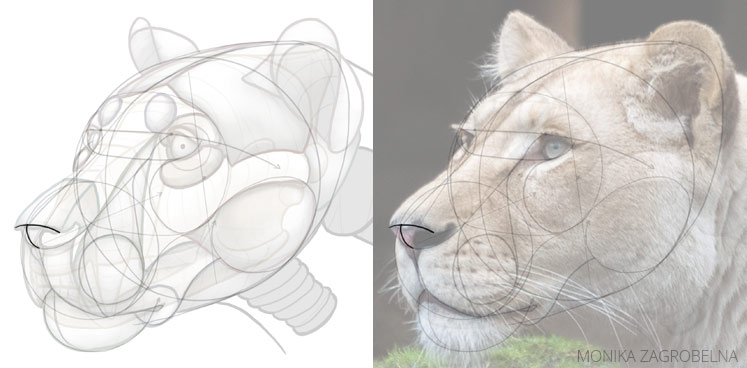
As you can meet in the beefcake charts, the olfactory organ is above the "pigsty" in the skull. So depict it like this—slightly above the front end of the muzzle, slightly curved towards the front.
Step 17
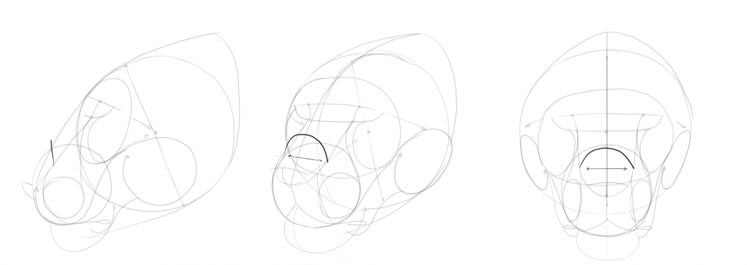
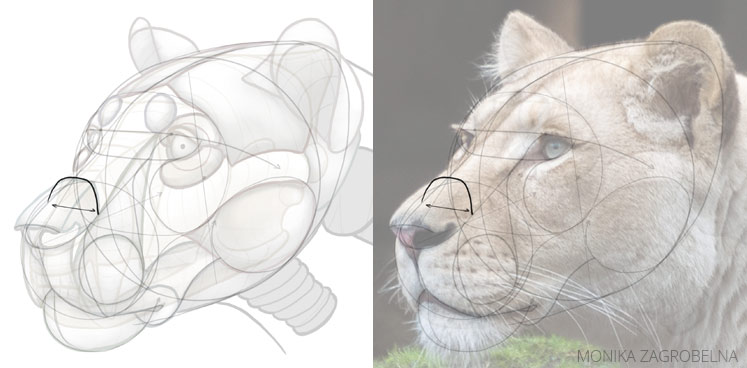
To identify the top of the nasal bridge at the college level, create a scaffolding for information technology first, around the ane/3 of the whole nose's length.
Step 18
Describe the other side of this flattened part of the nose. It's important, because it's often visible on the surface. This is too where the profile of the caput turns upwards.
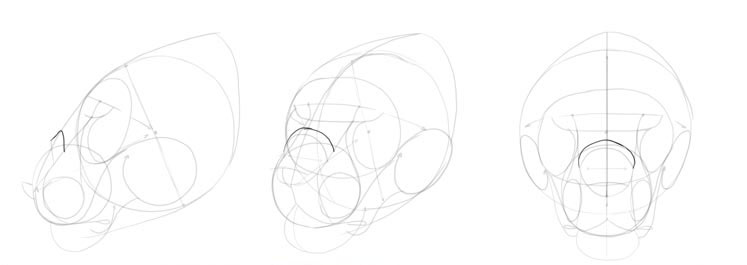
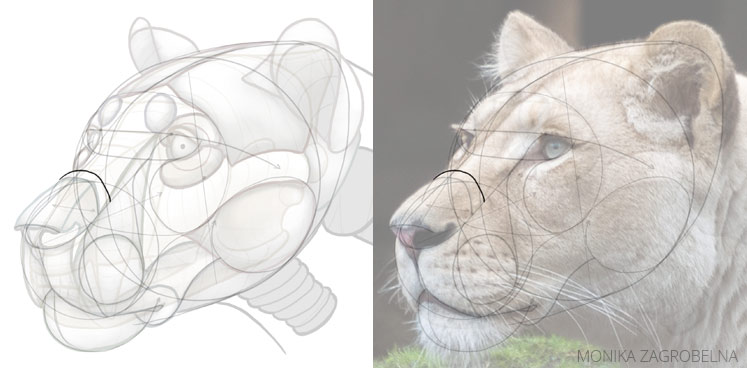
Footstep 19
Now draw the gentle slopes of the nasal bridge, and the "eyebrows" spots. The spots should turn slightly inwards.
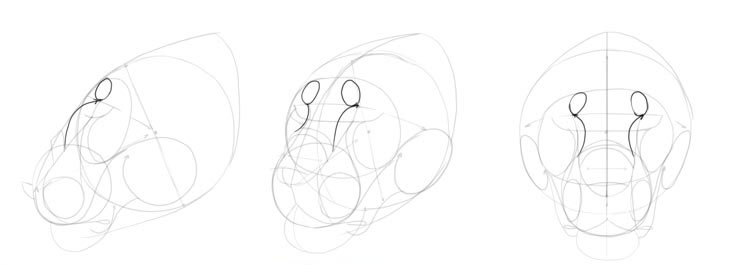
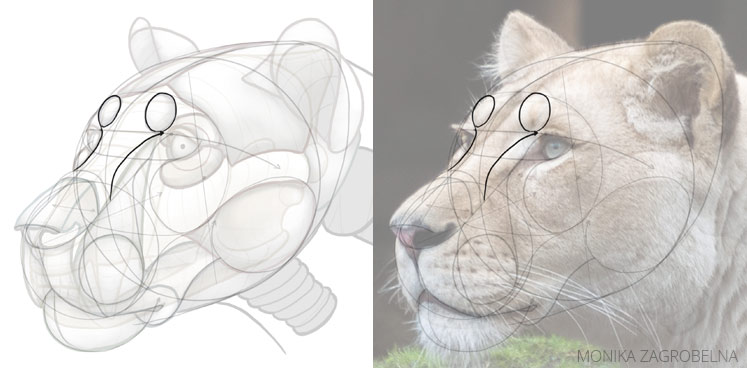
Step 20
Draw the sides of the actual olfactory organ. It's not flat—it curves slightly towards the tip.
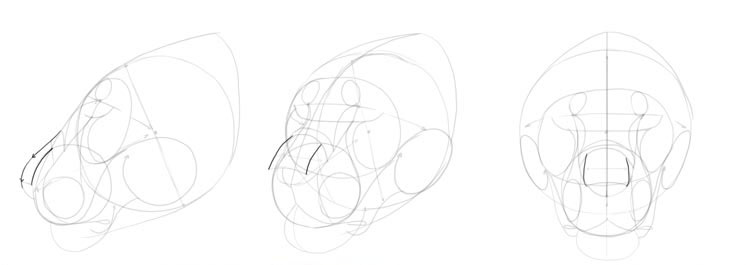
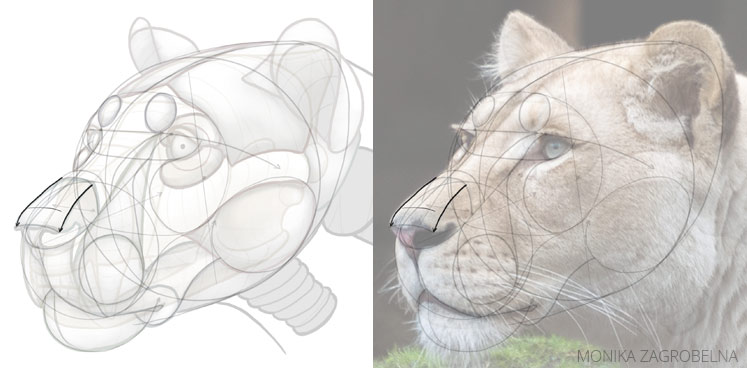
Step 21
Yous can now describe the bodily middle line of the head. Its profile will depend on the species.
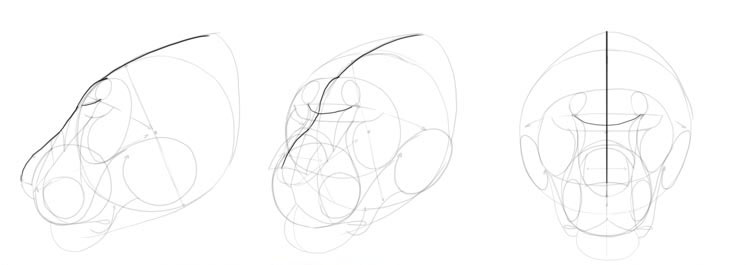
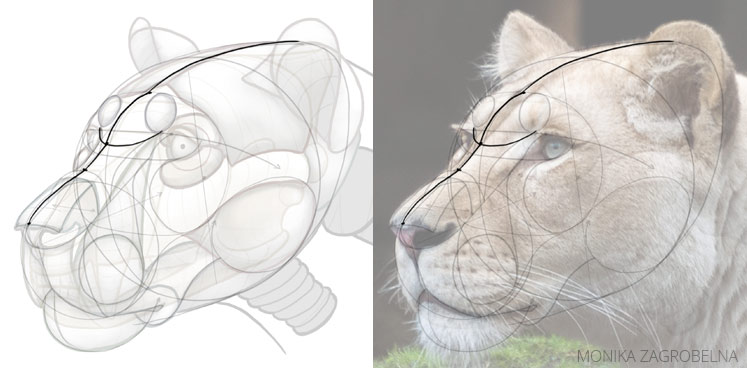
Footstep 22
You tin can now measure the location of the ears.
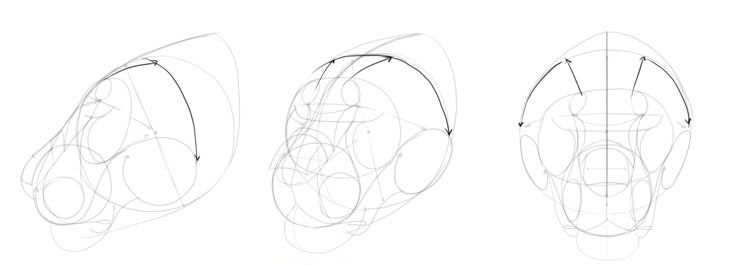
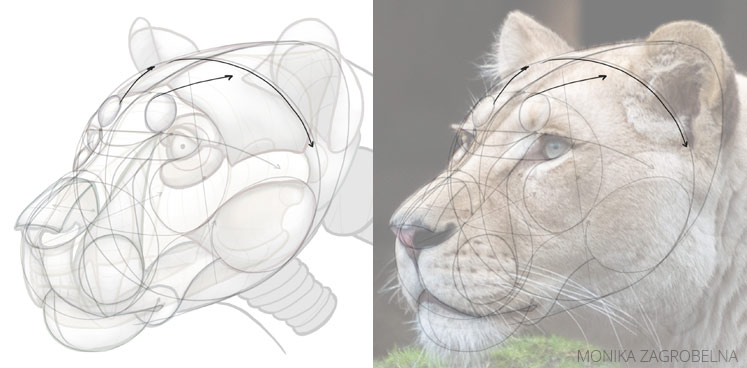
Step 23
It can be helpful to depict the ears along with the side of the cheeks. Brand the cheeks slightly angular in the process.
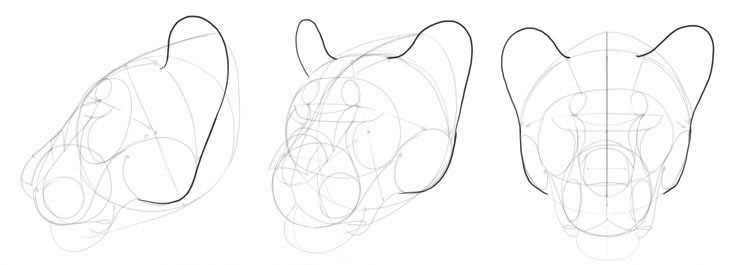
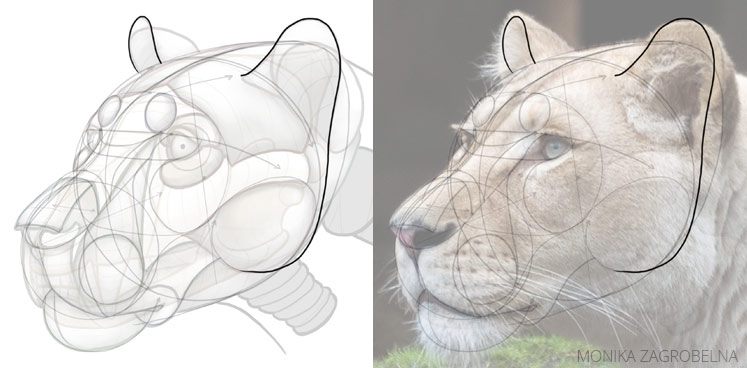
Step 24
Depict the inside of the ears.
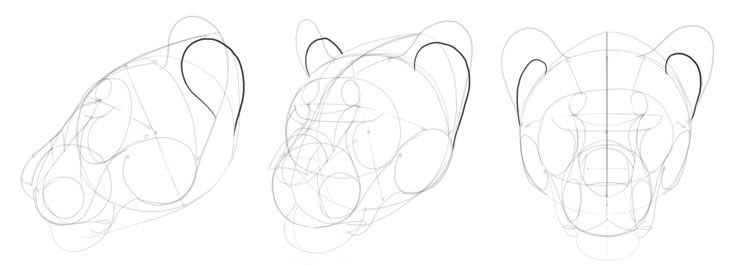
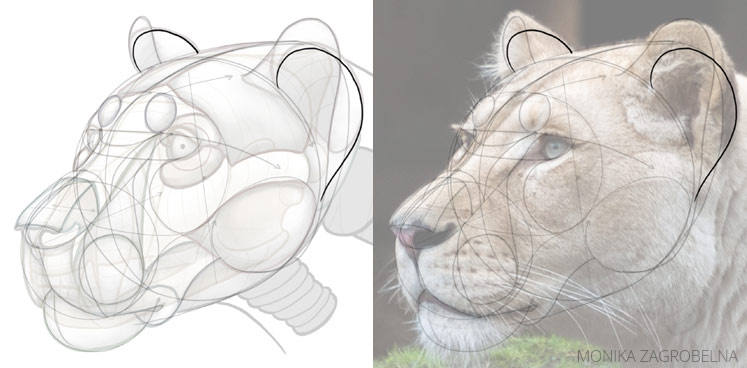
Footstep 25
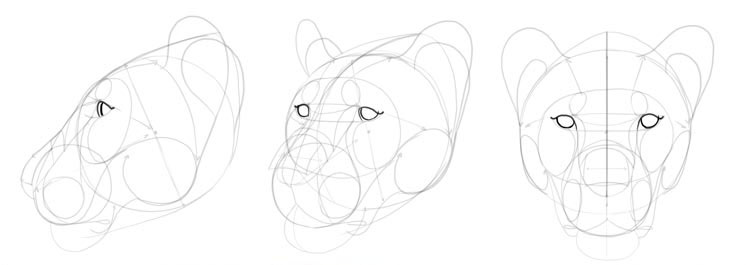
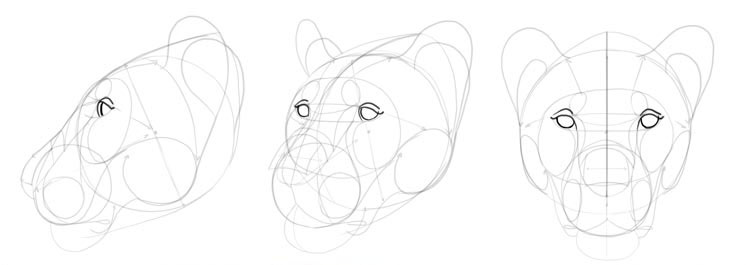
Congratulations, yous have all the guide lines necessary to draw a big true cat head! The other elements can be easily learned from photos, only permit me testify you a couple more steps. Offset, draw the eyes. Proceed them circular.
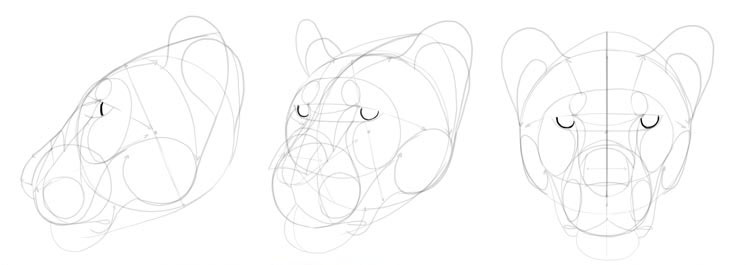
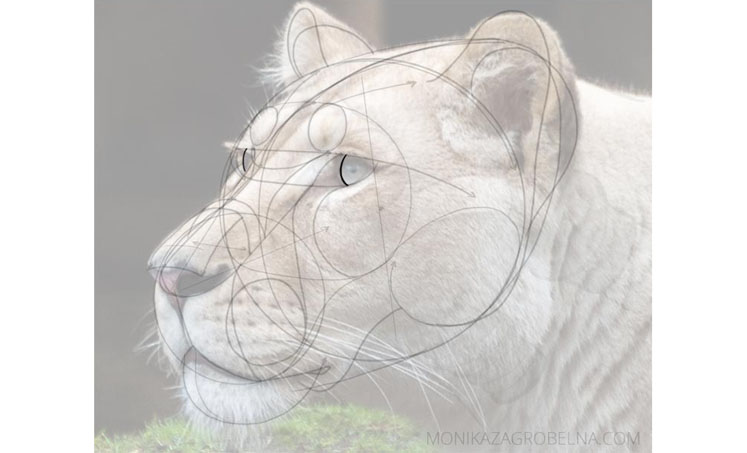
Describe the upper eyelids
Describe the "tear path".
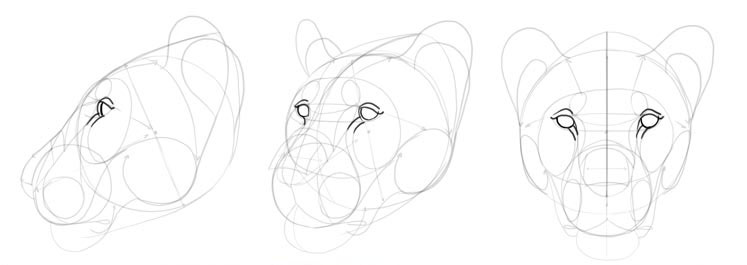
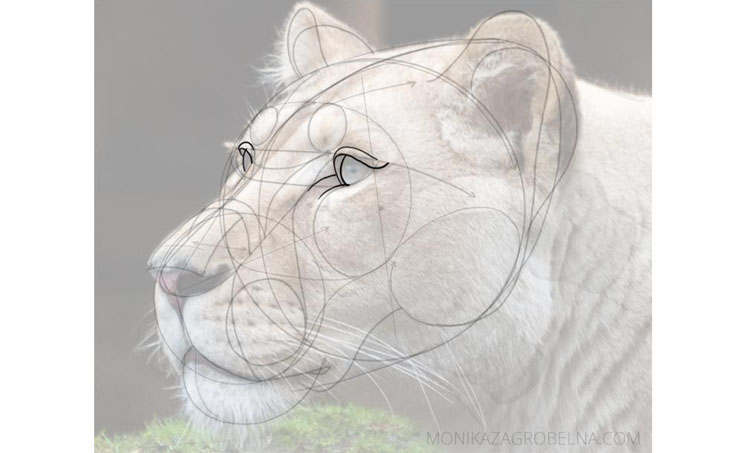
Describe the corners of the eyes.
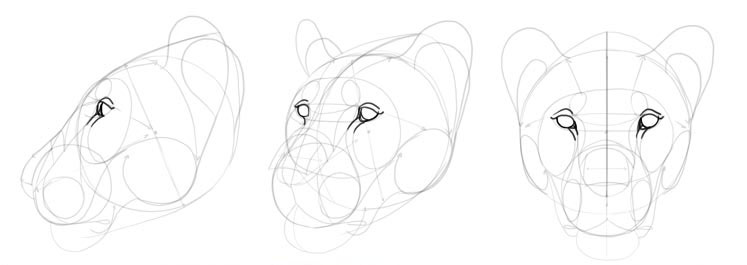
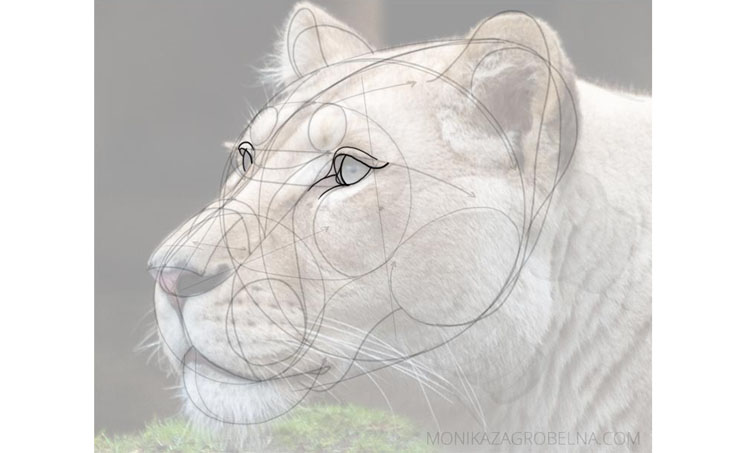
Depict the nose.
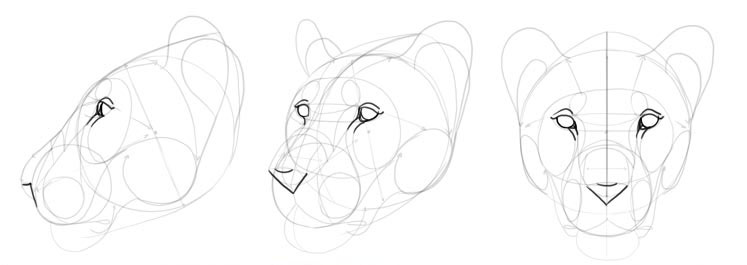
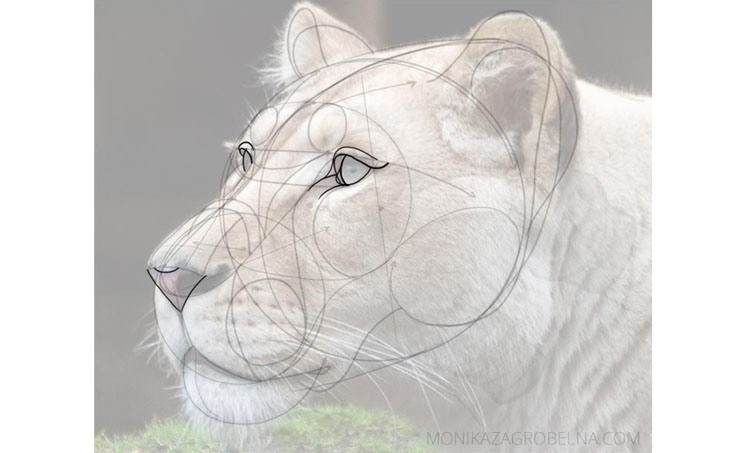
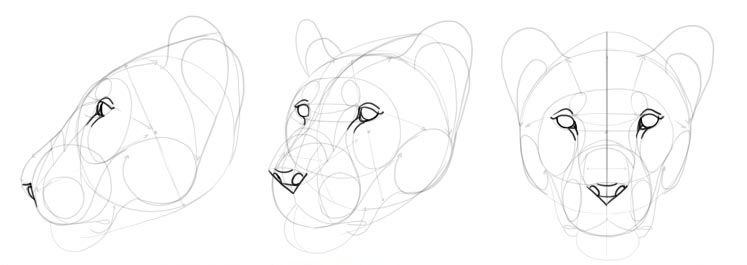
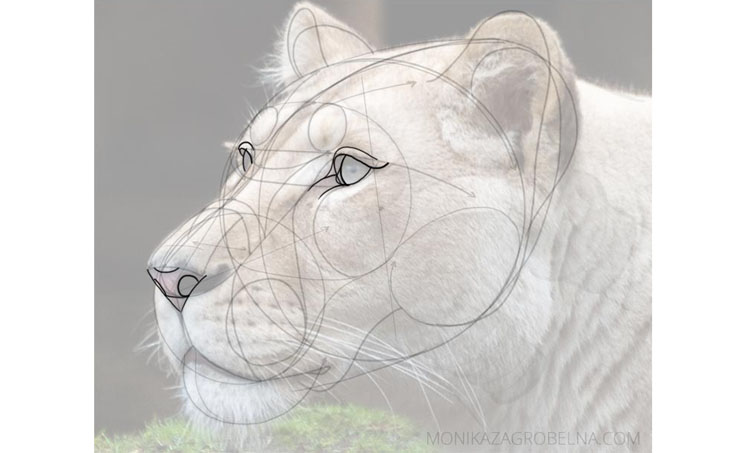
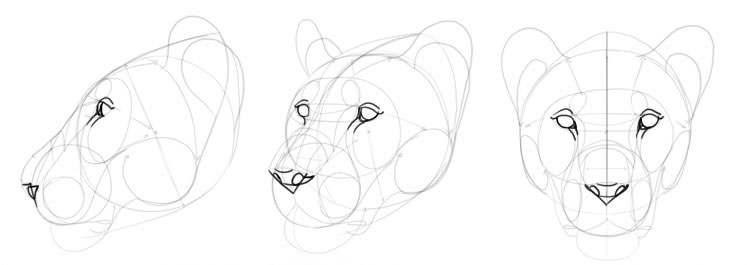
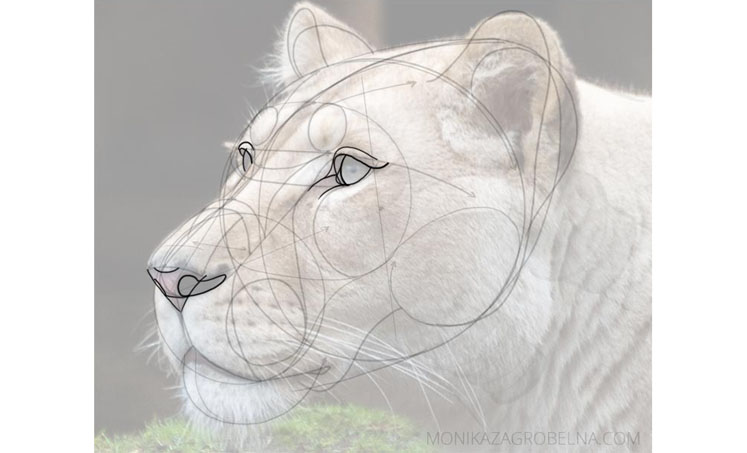
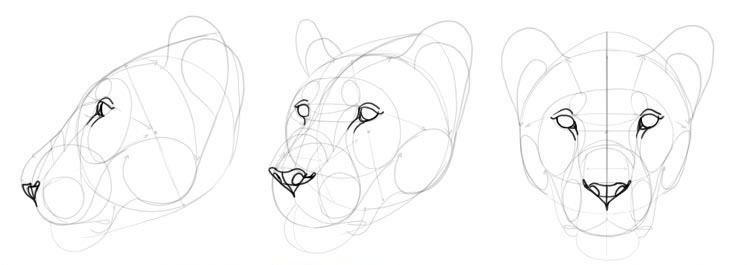
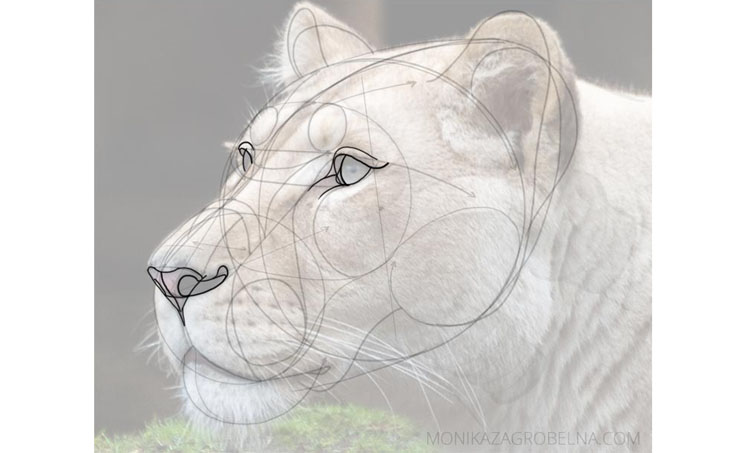
Draw the cheek-mane. Virtually species have information technology, even if they don't look long-haired at all. This fur makes the cheeks wait bigger, just it's just an illusion—this role is soft in touch on! Once yous start recognizing it in animals, information technology will be much easier to analyze the anatomy lying below the surface.
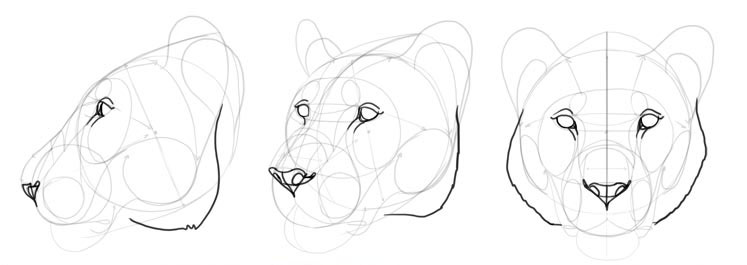
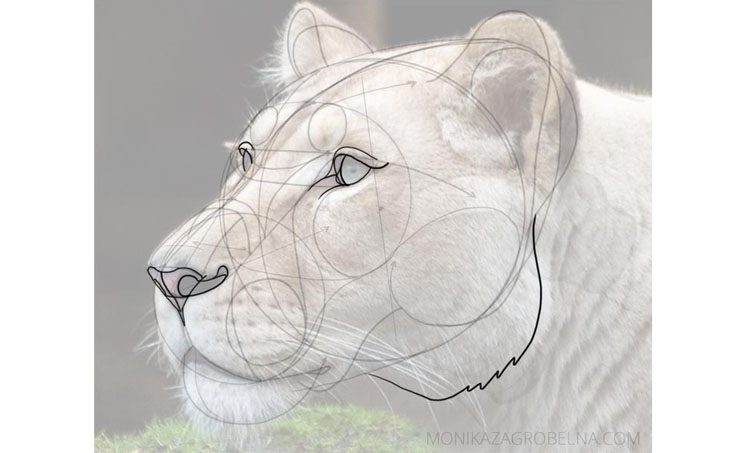
Draw the ears.
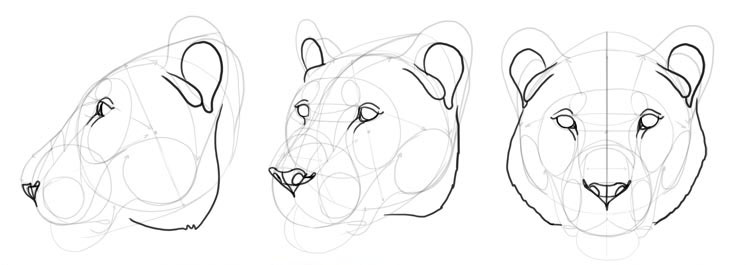
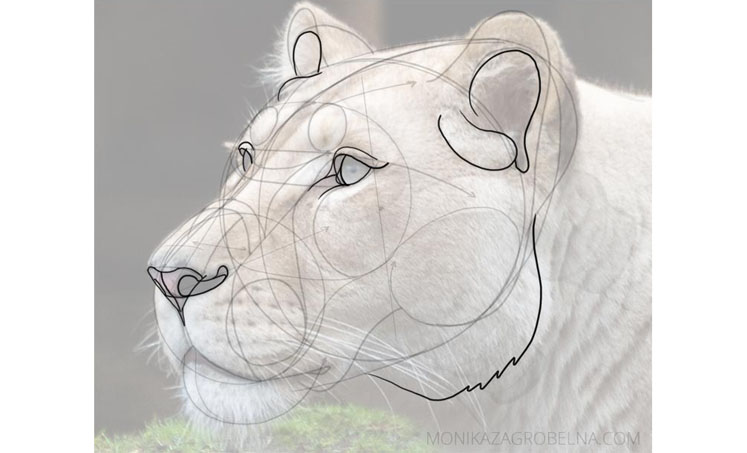
Draw the characteristic rhythm of the sides of the olfactory organ.
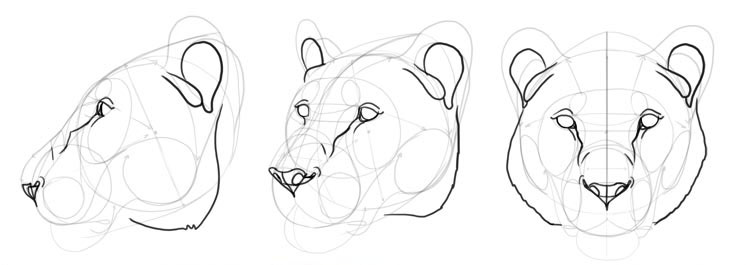
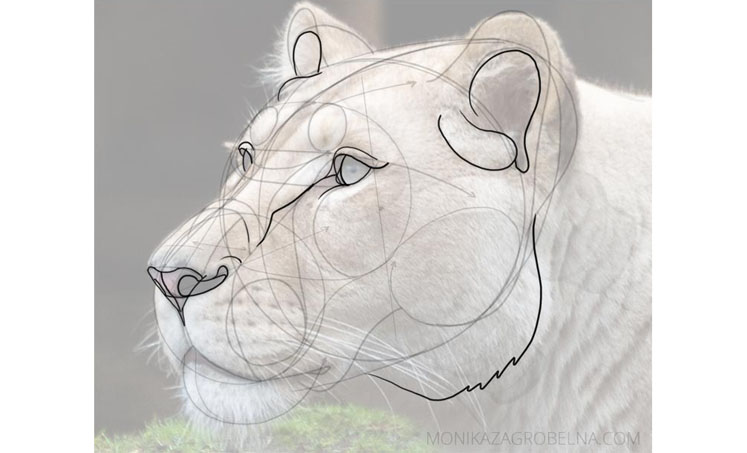
Draw the eyebrows. There are some muscles hither!
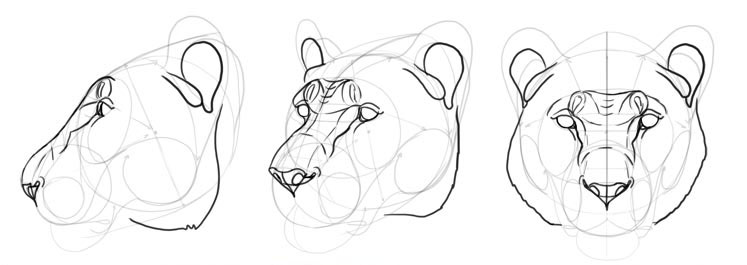
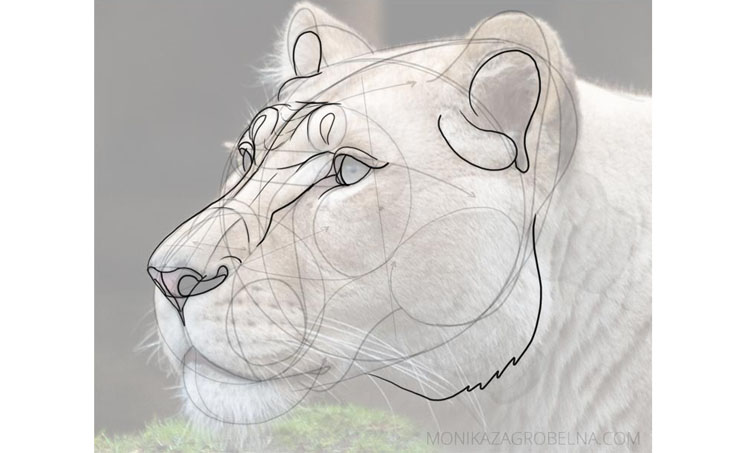
Describe all the other details. I exaggerated some of them for educational purpose. You don't have to draw them this mode, all include them all—that's a expert subject to do when drawing from photos.
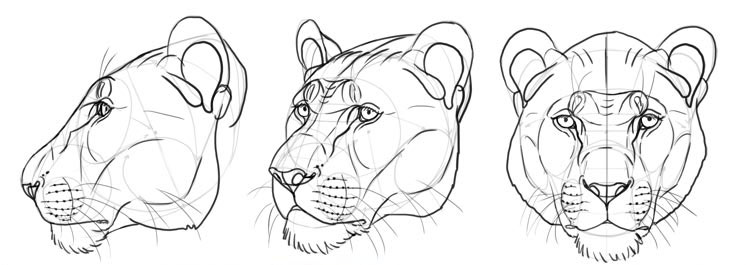
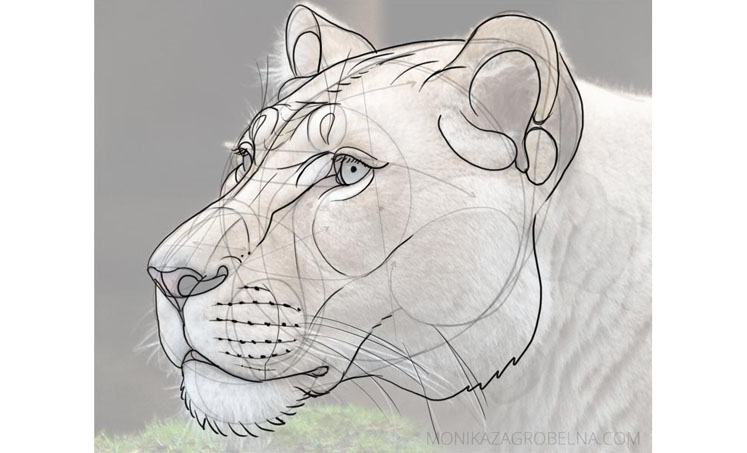
If you followed all the steps, but your cat head still looks wrong, hither are some questions to ask yourself:
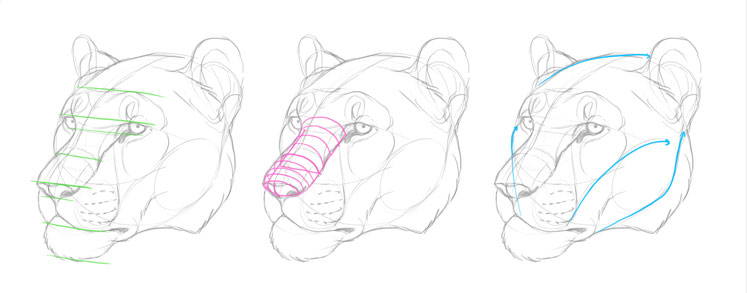
- Are all the symmetrical elements parallel to each other? I they would exist parallel in a simple front view, they must be parallel in perspective too
- Does the nose have book? Or have y'all confused the tiptop of the nose with the meridian of the skull?
- Does the skull have a visible rhythm?
1 popular mistake that I still make quite oft is to place the muzzle-sphere too close/also low/too high. But as I said, I don't know how to brand sure it'due south correct without adding a lot of guide lines, so this is something that you (and I!) demand to acquire past practice!
That's all for now! I promise y'all discover this method helpful. If you lot endeavour it, please tag me so that I could encounter if it works for yous: @monikazagrobelna on IG.

Source: https://monikazagrobelna.com/2019/03/24/how-to-draw-a-big-cat-head/
Posted by: holguinexquours.blogspot.com
0 Response to "How To Draw A Saber Tooth Tiger Head Step By Step"
Post a Comment